If you have started shopping for a chartplotter, you have probably noticed that the prices are all over the map. One unit costs less than a nice pair of boots, and another costs more than some people’s first boat. That spread is not random. It tracks screen size, sonar capability, networking, and the kind of boating you plan to do.
Understanding what actually drives the price helps you avoid both overspending on features you will never use and underbuying a unit that leaves you wanting more a season later.
Here is a realistic look at what chartplotters cost and what your money buys at each level.
The Price Range
A chartplotter can cost anywhere from under $150 to more than $4,000. On the low end, you are looking at compact fishfinder and GPS combo units aimed at kayaks, jon boats, and small center consoles. On the high end, you are looking at large flagship multifunction displays with twelve-inch touchscreens, radar integration, and networking that ties together multiple systems on a sizable boat. These are broad price ranges rather than fixed categories; the final cost depends on the brand, screen size, included features, chart package, and retailer.
Most recreational boaters land somewhere in the middle, spending roughly $400 to $1,400 for a unit that balances a usable screen size, solid sonar, preloaded charts, and the features that actually matter day to day. Knowing where you fall on that spectrum starts with understanding what pushes the price up and down.
What Actually Drives the Price
Screen Size and Display Quality
Screen size is one of the biggest cost factors. A five-inch keyed display costs a fraction of a twelve-inch touchscreen, and the jump between sizes is steep. Beyond raw size, display quality matters too. Higher-resolution screens, better sunlight readability, and touchscreen versus button controls all add to the price. A bright, high-resolution touchscreen you can actually read at noon in July costs meaningfully more than a basic display, but many boaters find that readability worth paying for.
Sonar Capability
Sonar is where a lot of the money goes, especially for anglers. Basic units give you standard sonar for seeing depth and fish. Mid-range and premium units often add CHIRP sonar, which can produce more detailed returns than traditional sonar. From there, scanning sonar like down-imaging and side-imaging adds cost, and real-time or live sonar, the kind that shows fish moving in the moment, sits at the top of the range and can add significantly to the price. If you do not fish seriously, you can skip much of this and save; if you do, it is often the whole point of the purchase.
Preloaded Charts
Cheaper units sometimes come without preloaded charts, meaning you add cartography separately. Many mid-range and premium units come with charts already loaded, often Navionics or C-MAP coverage for your region. Having charts included adds value but also contributes to the price, so when comparing units it is worth checking whether charts are bundled or a separate expense you will need to budget for.
Networking and Integration
The ability to connect your chartplotter to other systems, such as radar, autopilot, trolling motors, AIS, and additional displays, is a major price driver. Entry-level units are standalone devices. Premium multifunction displays act as the hub of an integrated system, and that capability is a big part of why they cost what they do. If you have a simple boat and just want navigation and sonar, you are paying for nothing by skipping heavy networking. If you are building out a fully integrated helm, it is essential.
GPS Precision and Extras
Higher-end units may include multi-band GPS for more precise positioning, faster processors for smoother operation, built-in Wi-Fi for wireless chart updates, and smartphone integration. These features can add convenience and improve integration with other equipment, but whether they are worth the extra cost depends on how you use your boat.
What Each Price Tier Gets You
Budget Units: Roughly $130 to $400
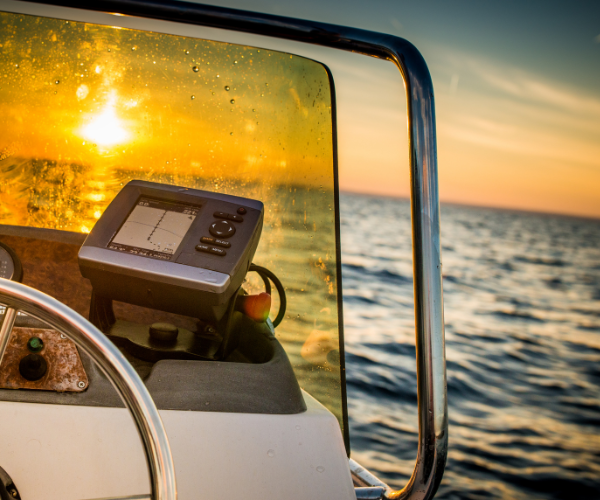
At the bottom of the range, you will find compact fishfinder and GPS combo units. These provide essential GPS navigation, basic sonar, and waypoint marking on small screens, typically four to five inches. Some of the better-known budget units deliver genuinely useful CHIRP sonar and bright, readable screens for well under $200.
This tier works well for kayaks, small center consoles, jon boats, and day cruisers where space and budget are tight. You will not get large displays, advanced scanning sonar, or networking, but for a small boat and casual use, these units cover the basics competently. For a weekend angler on a small boat, spending more than this often means paying for capability you will not use.
Mid-Range Units: Roughly $400 to $1,000
Step up to the mid-range and you gain preloaded charts, larger displays in the seven-to-nine-inch range, Wi-Fi connectivity, and better sonar including CHIRP and often down-imaging and side-imaging. This is the sweet spot for a lot of recreational boaters, offering a genuinely capable unit without flagship pricing.
Units in this tier suit trailer boats, mid-size center consoles, and weekend cruisers that want a screen and solid sonar but do not need radar or extensive networking. Many of the most popular chartplotters on the water sit right in this band, because they deliver most of what the average boater needs at a price that does not require serious financial commitment.
Premium Units: Roughly $700 to $1,400
Premium units bring touchscreen interfaces, larger and higher-quality displays, advanced sonar including side-imaging and live sonar compatibility, and comprehensive networking. This is where you start building a system rather than buying a standalone device. Some units in this range serve as network hubs, collecting and displaying data from sensors and devices throughout the boat.
This tier suits serious anglers, larger boats, and boaters who want integration with radar, autopilot, or multiple displays. The extra cost buys capability that genuinely matters for demanding use, though casual boaters who boat a few weekends a summer will often find better value in the mid-range.
Flagship Multifunction Displays: Roughly $2,000 to $4,400 and Up
At the top sit large flagship multifunction displays, typically ten to twelve inches or larger, with premium touchscreens, full networking, radar integration, and the most advanced sonar available. These are built for bigger boats, serious offshore use, and tournament-level fishing where every advantage counts.
Boaters buying at this level usually know exactly why they need it. For everyone else, this tier represents far more capability than recreational boating requires. The price reflects professional-grade hardware and integration that most weekend boaters will never fully use.
The Costs People Forget to Budget For
The sticker price on the chartplotter is not the whole story, and overlooking the extras leads to unpleasant surprises at checkout.
Transducers are the big one for sonar-equipped units. Some chartplotters come bundled with a transducer, while others are sold display-only, meaning you buy the transducer separately. A quality transducer adds cost, so always check whether one is included when comparing prices.
Installation is another consideration. A simple unit on a small boat is often a do-it-yourself job, but a networked system with radar and multiple displays can involve meaningful professional installation cost. Mounting hardware, cabling, and the occasional cable extension on larger boats add modest amounts too.
Charts can be an ongoing cost. If charts are not included, or if you want premium cartography with regular updates, factor in the purchase and any subscription for updates. Over the life of the unit, chart costs can add up, so it is worth understanding the cartography situation before you buy.
The Mobile App Alternative Worth Weighing
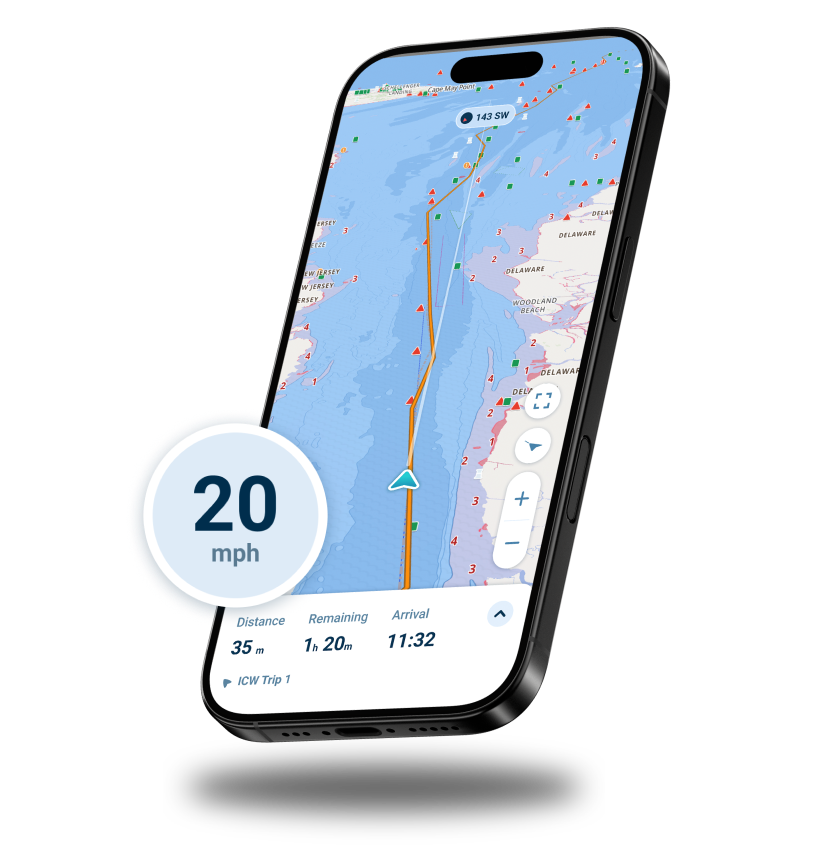
Before committing to a dedicated chartplotter, it is worth asking whether you need one at all. Marine navigation apps running on a phone or tablet have become genuinely capable, and they cost a tiny fraction of dedicated hardware. For many recreational boaters, an app delivers the navigation they actually need without the hardware investment or installation.
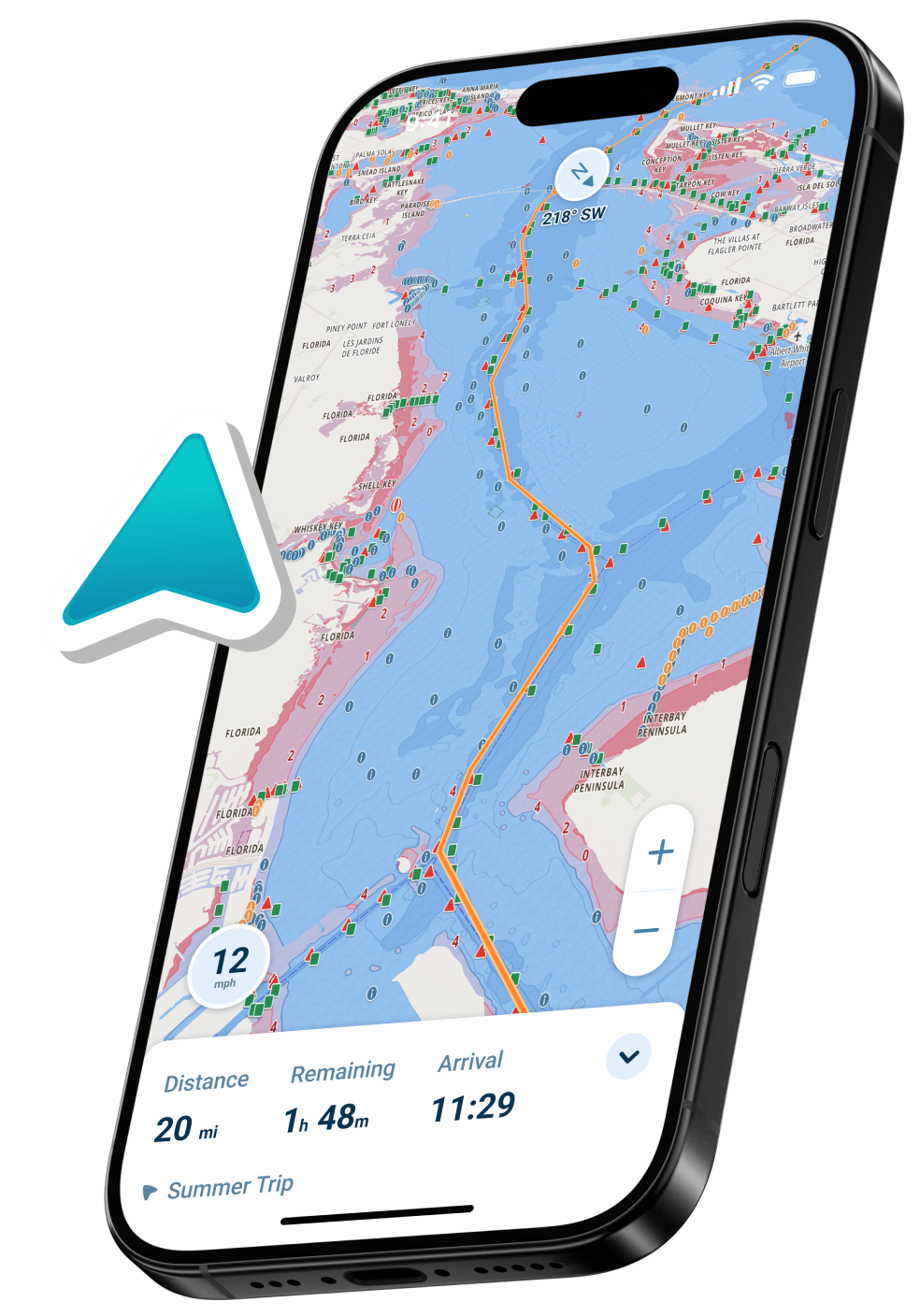
Apps like Wavve Boating, for example, provide marine chart information, GPS positioning, and draft-based depth shading that can be customized around your boat’s draft. Areas charted as shallower than the draft you enter are tinted red, helping you identify potentially shallow water while planning or navigating. This is a chart-based planning aid, not a measurement of the water directly beneath your boat or a guarantee that unshaded water is safe. Wavve is available for an annual subscription that is a small fraction of even a budget chartplotter’s price, using the phone or tablet you already own.
That does not make dedicated chartplotters pointless; a fixed, sunlight-readable display wired into your boat’s systems has advantages, especially on larger vessels or for serious anglers who want integrated live sonar. A dedicated unit can also be easier to view and operate at the helm than a phone, and may connect directly to other onboard equipment.
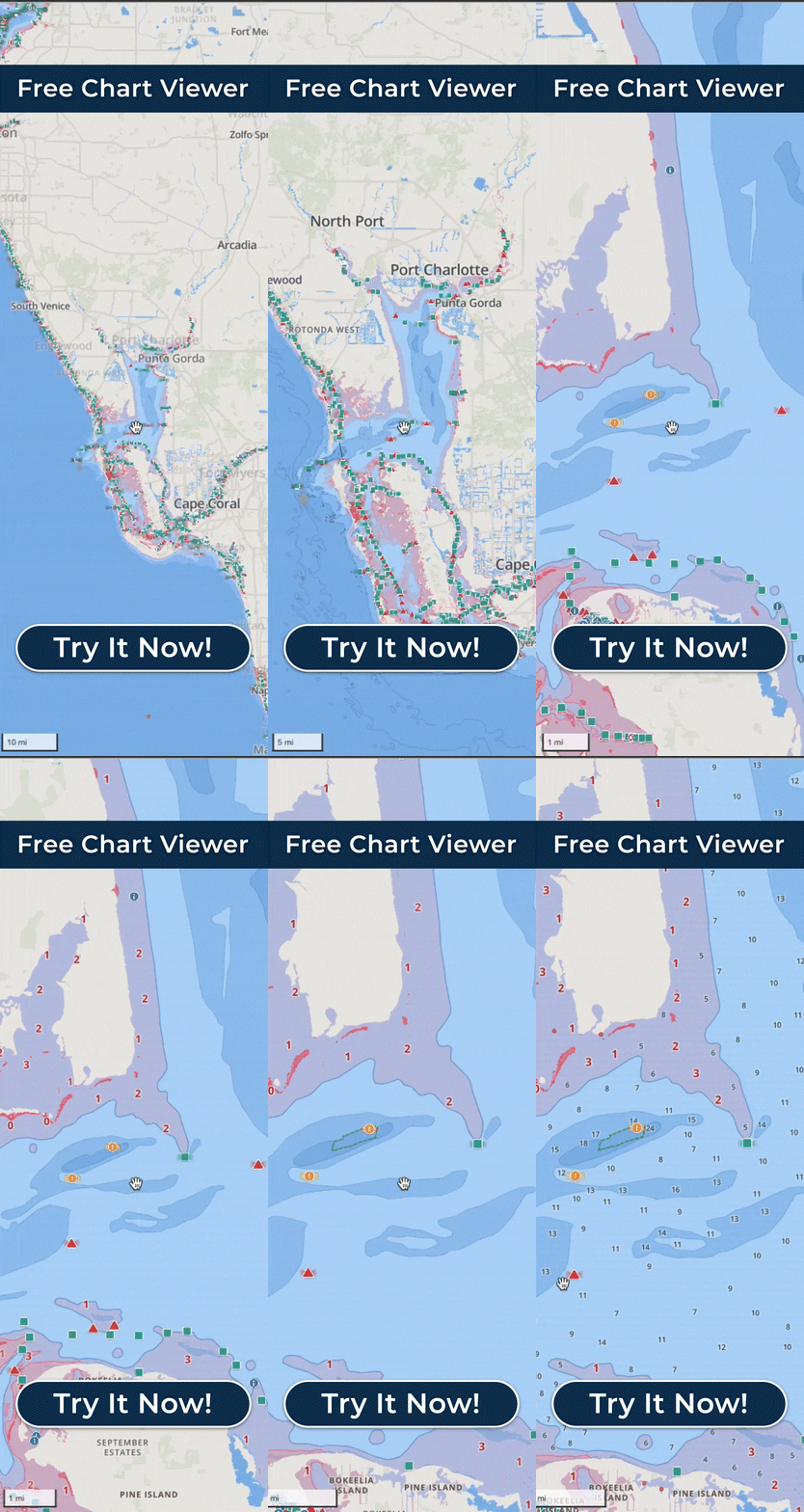
But for a weekend boater on a smaller boat, trying a capable app first can reveal whether you need to spend hundreds or thousands on hardware at all. Wavve also offers a free, browser-based Web Chart Viewer at https://chartviewer.wavveboating.com/ for exploring chart coverage and planning routes on a desktop or laptop. Routes planned in the viewer can be synced with the mobile app. Many boaters end up using both an app and a chartplotter, using the app for planning or as a backup while relying on the plotter at the helm.
Chartplotter prices range from under $150 to over $4,000. Here is what drives the cost, what each price tier gets you, and how to choose for your boat.
The right amount to spend comes down to self-assessment. If you boat a small vessel casually, mostly in familiar waters, a budget unit or even a navigation app may be all you ever need, and spending more would be money toward features you will not touch.
If you fish seriously and want crisp sonar and the ability to find structure, the mid-range and premium tiers start earning their cost. If you run a larger boat offshore or want a fully integrated helm with radar and autopilot, the premium and flagship tiers are where the necessary capability lives.
It is worth being realistic rather than aspirational here. It is easy to talk yourself into a bigger unit than your boating requires, imagining the fishing trips or offshore passages you might someday take. But the chartplotter that fits how you actually boat today, with a little room to grow, is almost always the smarter purchase than the one that fits the boating you imagine doing.
Working Out Your Number
So how much does a chartplotter cost? As a broad guide, plan on under $400 for a basic unit on a small boat, $400 to $1,000 for a capable mid-range unit that suits many recreational boaters, $700 to $1,400 for a premium unit with advanced sonar and networking, and $2,000 and up for a large flagship system on a bigger boat. These categories overlap, and actual prices vary by brand, model, retailer, currency, and what is included. Then add transducer, installation, and chart costs where they apply, since those extras are easy to forget.
The answer, though, is that the best chartplotter is the one that matches your boat, your water, and your style of boating, not the one with the most features or the highest price.
Figure out what you genuinely need, consider whether a navigation app might cover it for far less, add up the full cost including the extras, and buy the unit that fits your actual boating. That approach will serve you far better than either chasing the cheapest option or overspending on capability you will never use.