Official CHS charts represent the gold standard for Canadian marine navigation, providing authoritative hydrographic data for over 2,000 charted areas from Pacific to Arctic to Atlantic waters. Modern marine navigation apps now combine these official charts with real-time intelligence, creating safer navigation across both freshwater and saltwater environments.
Understanding which app delivers the best combination of CHS integration, Canadian-specific features, and practical usability helps boaters select navigation tools that enhance safety while simplifying trip planning.
What Makes a Good Marine Navigation App for Canada
Official CHS Chart Integration
The Canadian Hydrographic Service produces authoritative nautical charts for Canadian waters through precise hydrographic surveys. Since 1883, following the tragic sinking of the steamship Asia in Georgian Bay (which killed over 100 people), CHS has worked to make Canadian navigation safer through accurate charting. Canadian law requires commercial vessels and, in many circumstances, recreational vessels to carry official CHS charts when navigating waters where these charts are available.
Quality marine navigation apps incorporate official CHS Electronic Navigational Charts (ENC) rather than relying on crowd-sourced or unofficial data. This integration ensures legal compliance while providing accurate, regularly updated depth information essential for safe navigation. CHS charts cover Canadian waters comprehensively, from the Bay of Fundy and St. Lawrence River to the Great Lakes, Pacific coast, and Arctic waters.
Real-Time Water Level and Tide Adjustments
Canadian waters experience significant water level variations that directly impact navigation safety. Great Lakes levels fluctuate seasonally and annually based on precipitation, evaporation, and flow patterns, changes that can affect navigable depths by several feet. Historical records show Great Lakes water levels varying by over six feet between extreme high and low years, creating dramatically different navigation conditions.
Coastal areas face tidal variations reaching 50+ feet in the Bay of Fundy (the world’s highest tides), with strong tidal currents throughout Atlantic Canada, British Columbia’s Inside Passage, and the St. Lawrence River system. These tidal ranges affect not just available depth but also current speeds that impact vessel handling and fuel consumption.
The best navigation apps for Canadian waters integrate real-time water level data from CHS monitoring stations, automatically adjusting displayed depths based on current conditions. This dynamic approach provides more accurate clearance information than static chart depths referenced to historical datum levels. Understanding how water levels affect navigation becomes critical for safe passage planning in variable Canadian conditions.
Water level monitoring in Canada began in 1912 specifically to address these fluctuations affecting commercial and recreational navigation. Today’s digital systems provide hourly updates to monitoring stations across Canadian waters, data that modern apps can incorporate to show real-time navigable depths.
Offline Capability for Remote Areas
Much of Canada’s best cruising grounds exist far from reliable cell coverage. Northern Ontario lakes like Lake of the Woods or Temagami offer spectacular wilderness cruising but zero cellular infrastructure. British Columbia’s Inside Passage features hundreds of miles of protected cruising through remote areas. Atlantic Canada’s remote coves and Newfoundland’s harbors similarly lack the cellular coverage urban boaters take for granted.
Navigation apps must function completely offline after downloading relevant chart regions. GPS operates independently of cellular connectivity, satellite signals work anywhere with clear sky view, allowing position tracking in the most remote locations. However, chart data, route planning, and safety features must work without internet access for safe remote Canadian exploration.
The ability to download entire provinces or regions before departure transforms remote navigation from risky adventure to confident exploration. Boaters planning extended cruises through areas like the North Channel, Desolation Sound, or the Thousand Islands can download comprehensive chart coverage before leaving cellular range.
Draft-Aware Safety Features
Shallow water navigation challenges affect Canadian boaters across diverse environments. Great Lakes bays like Georgian Bay feature countless shallow shoals and rock formations requiring precise depth awareness. Coastal estuaries in Nova Scotia, New Brunswick, and BC change depth dramatically with tides. River systems like the Trent-Severn Waterway, Rideau Canal, and St. Lawrence present their own shallow water challenges.
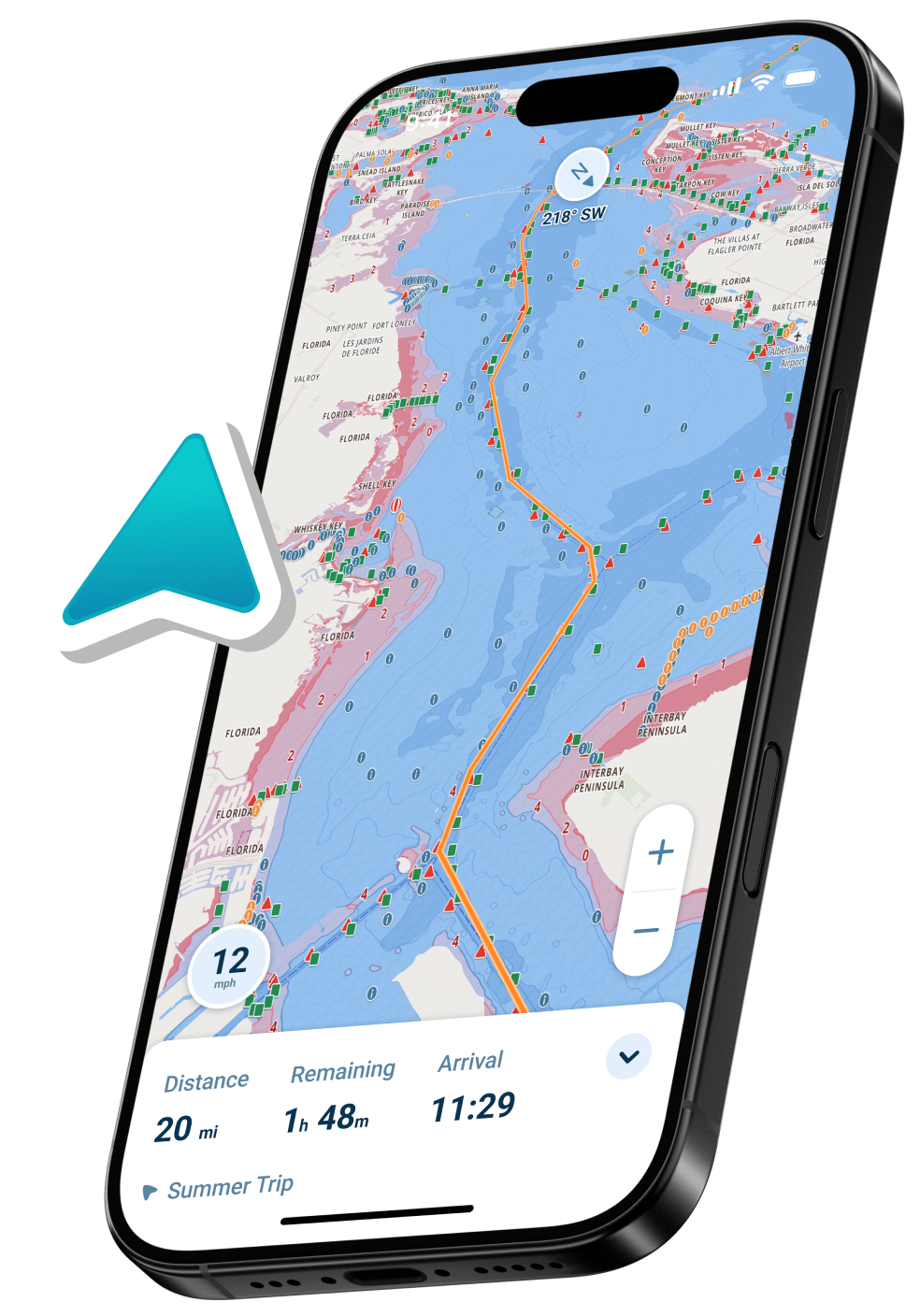
Modern draft-aware navigation eliminates this mental arithmetic by automatically color-coding charts based on your boat’s draft plus current water levels. Enter your vessel’s draft once, and the system continuously shows which areas are safe (typically blue) versus shallow (red or yellow) for your boat right now given current conditions. This visual approach to shallow water navigation proves particularly valuable in Canadian waters where fluctuating levels create dynamic depth conditions.
Weather Overlays and Integrated Forecasting
Canadian weather patterns present their own navigation challenges. Great Lakes squalls develop rapidly, creating dangerous conditions in hours. Pacific storms approach coastal British Columbia with intensity that demands respect and careful planning. Arctic weather changes dramatically, affecting northern cruising routes. Even inland lakes can experience sudden weather shifts requiring boaters to seek shelter quickly.
Integrated marine weather forecasts layered directly on charts help boaters plan routes considering forecast conditions rather than switching between separate weather apps and chart displays. The ability to view hourly wind, wave, and weather predictions for your specific planned route transforms trip planning from guesswork to informed decision-making.
Environment Canada provides marine weather forecasts for Canadian waters, but accessing this data conveniently while planning routes or underway requires apps that integrate forecasting with chart displays. Seeing tomorrow’s predicted wind and wave conditions overlaid on your planned route helps identify whether conditions favor your trip or warrant postponement.
Portability and Ease of Use
Canadian boating often involves seasonal use, multiple vessels, or shared boats. Fixed chartplotters work well for dedicated year-round vessels but feel limiting for boaters who operate different craft throughout the season, perhaps a small fishing boat in spring, kayak in summer, larger cruiser in fall.
Smartphone and tablet-based navigation provides portability across platforms while eliminating permanent installation requirements. The same app that guides your navigation on the Great Lakes works identically when you trailer your boat to the Maritimes or rent a boat in British Columbia. Understanding chartplotter alternatives helps Canadian boaters evaluate whether app-based solutions meet their specific needs versus traditional hardware installations.

Top Marine Navigation Apps for Canada Compared
Wavve Boating: Comprehensive Canadian Solution
Annual Cost: $69.99 USD ($11.99 monthly option available)
CHS Coverage: Complete
Draft-Aware Features: Yes (automated)
Wavve Boating integrates official CHS charts with automated safety features specifically addressing Canadian navigation challenges. The platform provides 17,000+ official charts worldwide including complete CHS coverage across Great Lakes, St. Lawrence, Atlantic, Pacific, and Arctic coastal waters, plus inland lake coverage.
Key Features for Canadian Waters:
The draft-aware depth shading automatically color-codes charts showing safe (blue) versus shallow (red) water based on your vessel’s specific draft plus real-time CHS water level data. This feature handles both Great Lakes fluctuations and tidal variations, eliminating manual depth calculations. Enter your boat’s 2-foot draft once, and the system continuously shows which areas provide safe clearance given current water levels.
Seven-day marine weather forecasts layer directly on charts, showing hourly wind, wave, and condition predictions for planned routes. Weather data updates hourly from official meteorological sources including Environment Canada feeds, providing Canadian-specific marine forecasting.
Community hazard reporting allows Canadian boaters to share real-time information about navigation hazards, new sandbars, relocated markers, or discovered good anchorages. This crowd-sourced intelligence supplements official charts with current local knowledge, particularly valuable in dynamic environments like the Great Lakes where shoals shift or the North Channel where local knowledge prevents grounding.
Track recording captures your actual routes for future reference or sharing with friends planning similar trips. Integration with Sea-Doo displays provides navigation data directly on PWC screens for jet ski navigation in Canadian waters.
Why It Excels for Canadian Conditions:
Real-time water level integration handles Great Lakes fluctuations seamlessly, the system automatically adjusts depth displays as water levels change throughout seasons and years. Coastal tidal integration works similarly, showing current navigable depths rather than static chart datum depths requiring manual tide calculations.
Complete CHS coverage under one worldwide subscription eliminates regional purchase requirements. Whether cruising Georgian Bay, British Columbia’s Gulf Islands, Nova Scotia’s Bras d’Or Lakes, or Newfoundland’s Trinity Bay, the same subscription provides official chart access. This worldwide approach also covers international destinations when Canadian boaters venture to US waters, Caribbean, or beyond.
Understanding alternatives to traditional chartplotters helps contextualize how modern apps like Wavve Boating provide professional capability without hardware investment.
Navionics Boating (by Garmin)
Annual Cost: $49.99 USD (US & Canada bundle)
CHS Coverage: Excellent
Draft-Aware Features: No
Navionics provides detailed CHS and NOAA chart coverage with strong community-sourced bathymetry through SonarChart HD. The platform offers autorouting, tide predictions, and offline downloads supporting Canadian waters comprehensively. Following Garmin’s acquisition of Navionics, the app now integrates with Garmin’s marine electronics ecosystem.
Strengths for Canadian Waters:
Excellent chart detail in popular Canadian waters including all Great Lakes, coastal British Columbia (including the Inside Passage), Maritime provinces, and St. Lawrence River system. SonarChart HD community contours provide additional depth detail in well-traveled areas where users have contributed sonar data. Strong Garmin ecosystem integration benefits users with existing Garmin hardware installations.
Limitations:
No automatic draft-aware depth shading, boaters manually interpret whether displayed depths provide adequate clearance for their vessel at current water levels. Tides display separately rather than integrating with chart depths for dynamic depth calculations, requiring mental math to determine actual available clearance. At $49.99 annually, costs more than some alternatives while lacking automated safety features.
Best For: Boaters wanting maximum contour detail in popular waters and those already invested in Garmin marine electronics. Detailed Navionics pricing information helps compare total costs over multiple years.
C-MAP App
Annual Cost: $14.99 USD (premium subscription)
CHS Coverage: Good
Draft-Aware Features: No
C-MAP offers clean vector charts with CHS-compatible coverage and worldwide access under one subscription. The budget-friendly pricing appeals to recreational boaters seeking straightforward charting without premium features.
Strengths:
Low annual cost represents significant savings compared to competitors. Uncluttered interface for basic navigation needs. Worldwide coverage eliminates regional purchase requirements, the same subscription covers Canadian waters and international destinations.
Limitations:
No real-time tide integration with chart depths or vessel-specific draft shading. Basic weather overlays provide minimal detail compared to specialized marine forecasts. Feature set remains basic compared to competitors offering advanced routing or community features.
Best For: Budget-conscious boaters needing straightforward charting without advanced features.
Garmin ActiveCaptain
Annual Cost: Free (with optional premium content)
CHS Coverage: Good
Draft-Aware Features: No
ActiveCaptain provides basic charting with community points of interest and integration with Garmin hardware. The free price point attracts boaters already owning Garmin chartplotters seeking supplemental mobile access.
Strengths:
No additional cost if you own Garmin equipment. Community-driven marina and anchorage information gathered from ActiveCaptain users. Integrates with Garmin hardware for synchronizing waypoints and routes.
Limitations:
Limited standalone functionality, full value requires Garmin hardware ownership. No draft-aware features or comprehensive offline capability for remote Canadian cruising. Basic feature set compared to dedicated navigation apps.
Best For: Existing Garmin chartplotter owners wanting mobile companion app.
Head-to-Head Comparison Table
| App | Annual Cost (USD) | Draft-Aware + Real-Time Levels | Weather Overlays | Offline Capability | Community Features | Best For Canadian Boaters |
| Wavve Boating | $69.99 | Yes | Comprehensive | Yes | Strong | Safety features, variable water levels, all-in-one solution |
| Navionics Boating | $49.99 | No | Basic | Yes | Limited | Maximum contour detail, Garmin ecosystem users |
| C-MAP | $14.99 | No | Basic | Yes | Minimal | Budget-focused, basic charting needs |
| Garmin ActiveCaptain | Free | No | Basic | Limited | Good | Existing Garmin hardware owners |
Navigating Canada’s Unique Waters
Great Lakes Navigation
Great Lakes water levels fluctuate significantly, seasonal variations plus long-term climate patterns create depth changes affecting navigation safety across all five lakes.
These fluctuations dramatically affect navigation, particularly in shallow bays, river mouths, and near-shore areas popular with recreational boaters. Harbors that provided comfortable clearance during high water years become barely accessible during low water periods. Rocky shoals that stayed submerged safely during high water become serious hazards when levels drop.
Wavve Boating’s real-time water level integration automatically adjusts depth displays based on current Great Lakes levels reported by CHS monitoring stations. Boaters see actual navigable depths right now rather than historical chart datum depths requiring manual offset calculations. The draft-aware shading updates continuously as water levels change throughout seasons, showing exactly which areas your specific vessel can safely navigate today.
Coastal and Maritimes Waters
Strong tides throughout Atlantic Canada, British Columbia’s Inside Passage, and the St. Lawrence River create dynamic depth conditions that change dramatically throughout each day. The Bay of Fundy’s extreme tides (highest in the world, exceeding 50 feet in some locations) make tide awareness absolutely essential for safe navigation. Passages navigable at high tide become exposed mudflats at low tide six hours later.
Tidal currents in these areas also affect vessel handling significantly. The St. Lawrence near Quebec City, Reversing Falls in Saint John, and numerous BC passages experience currents exceeding 5-8 knots during peak tidal flow, speeds that can overwhelm underpowered vessels or create dangerous conditions when opposing wind.
Integrated tide predictions coupled with draft-aware depth visualization show boaters exactly when specific passages become navigable for their vessel. Rather than consulting separate tide tables, performing mental arithmetic about available depth, and hoping calculations are correct, Wavve handles these calculations automatically and displays results visually.
Inland Lakes and Rivers
Thousands of inland lakes across Canadian provinces offer excellent cruising but present their own navigation challenges. Ontario’s Kawartha Lakes, Muskoka region, and Trent-Severn Waterway; Quebec’s Lac Saint-Jean and Outaouais River; Manitoba’s Lake Winnipeg, all provide recreational boating opportunities with limited cellular coverage.
Detailed CHS coverage extends to major recreational waters, but accessing this coverage in remote areas demands offline capability. After downloading relevant regions before departure (easily accomplished over home WiFi), full navigation functionality works without cell service throughout trips.
The Trent-Severn Waterway presents unique navigation challenges, a combination of rivers, lakes, and canal sections with variable depths and numerous locks. Having detailed charts accessible offline while transiting this 386-kilometer system prevents navigation uncertainty and helps plan lock approaches.
Frequently Asked Questions About Canadian Marine Navigation Apps
Do I need a dedicated chartplotter for Canadian waters?
No. Modern marine navigation apps provide professional-grade capability on smartphones and tablets you already own, eliminating expensive chartplotter hardware ($500-2000+) while often delivering superior features like draft-aware depth shading that traditional units lack. Apps update automatically with latest chart corrections, while hardware units require purchasing new chart cards ($100-200) periodically. For Canadian recreational boating, app-based navigation delivers better value and more advanced features than traditional hardware for most users.
How much do marine navigation apps cost in Canada?
Annual costs for quality marine navigation apps range from free (Garmin ActiveCaptain, though requiring hardware for full functionality) to $69.99 USD (Wavve Boating), with most options falling between $15-60 annually. When evaluating cost, consider features included: draft-aware navigation, real-time water level integration, comprehensive weather forecasting, and offline capability justify higher subscription costs for serious Canadian boating. Over typical 3-5 year ownership periods, app subscriptions cost less than traditional chartplotter hardware plus periodic chart updates.
Which app works best for the Great Lakes?
Wavve Boating excels for Great Lakes navigation through real-time water level integration that automatically adjusts displayed depths based on current lake levels from CHS monitoring stations. This feature directly addresses the primary navigation challenge Great Lakes boaters face, fluctuating water levels that can change navigable depths by several feet between seasons or years. The draft-aware depth shading combined with real-time levels shows exactly which areas provide safe clearance for your specific vessel right now, eliminating guesswork about whether chart datum depths plus current water levels accommodate your boat’s draft.
Can I use these apps offline in remote Canadian areas?
Yes. Quality marine navigation apps including Wavve Boating, Navionics, and C-MAP allow downloading chart regions for complete offline functionality. After downloading (easily accomplished over WiFi before departure), all navigation features work without cellular connectivity. GPS operates independently of cell service, satellite signals provide position tracking anywhere with clear sky view. This offline capability proves essential for remote Canadian cruising in areas like Northern Ontario lakes, BC’s Inside Passage, or Atlantic Canada’s remote harbors where cell coverage is absent.
Is Wavve Boating good for Sea-Doo and PWC riders in Canada?
Yes. Wavve integrates directly with Sea-Doo BRP displays, showing navigation data including charts, waypoints, and routes on PWC built-in screens. The draft-aware features prove particularly valuable for jet skis navigating shallow Canadian waters, PWCs typically draw under 12 inches but still face grounding risks in rocky areas or extreme low water. Offline capability works throughout remote areas without cell coverage, essential for backcountry PWC exploration. The combination of BRP integration, shallow-water features, and offline functionality makes Wavve ideal for Canadian PWC riders.
Final Recommendation for Canadian Boaters
For most Canadian boaters, Wavve Boating delivers the best combination of official CHS charts, real-time safety features addressing Canadian-specific conditions, and ease of use. The platform’s automated draft-aware depth shading integrated with real-time water levels directly addresses the primary navigation challenges Canadian boaters face, fluctuating Great Lakes levels and strong coastal tides.
Whether cruising Great Lakes bays, exploring British Columbia’s Gulf Islands, navigating Maritime harbors, or discovering inland lakes, proper navigation tools enhance both safety and enjoyment. Modern apps eliminate expensive hardware requirements while providing features traditional chartplotters can’t match, particularly the automated draft and water level integration essential for variable Canadian conditions.
Start your free trial today and discover why thousands of Canadian boaters trust Wavve Boating for safe, confident navigation across Canada’s diverse and spectacular waters.