Deckee vs Navionics (2026): Which Boating App Is Better for You?
Choosing the Right Marine Navigation App in 2026
The way boaters navigate is changing. What used to require bulky hardware and separate chartplotters can now be handled entirely from a smartphone. Apps like Deckee and Navionics have become staples for boaters across Australia, but they serve very different purposes.
Deckee is focused on safety, compliance, and awareness. It’s a go-to for checking alerts, no-wake zones, and boating regulations before heading out. Navionics, on the other hand, dominates the world of professional-grade marine charting, offering ultra-detailed maps and route-planning tools designed for serious navigators.
Both are powerful in their own way, but most boaters today want something simpler: a clean, intuitive marine navigation app that combines safety, live weather, tides, and community updates in one place.
That’s why apps like Wavve Boating are quickly becoming the preferred choice. But before we get there, let’s break down how Deckee vs Navionics stack up, and where each one shines or falls short for Australian users.
Understanding the Core Difference Between Deckee and Navionics
Deckee: Built for Safety and Boating Awareness
Deckee was designed to make boating safer and more compliant. Partnered with government agencies and maritime authorities, it provides verified information such as restricted zones, speed limits, weather alerts, and marine safety advisories.
Its strength lies in real-time awareness rather than navigation. You can see where you are on the water, view nearby safety zones, and get official updates before or during your trip.
Deckee is particularly popular among new boaters and those using small vessels or personal watercraft. It helps them stay informed, but it doesn’t replace a charting system. You can’t plot complex routes, view bathymetric depth data, or auto-route around obstacles.
If safety is your primary concern, Deckee does its job well. But if you want to navigate actively, you’ll need something more comprehensive.
Navionics: Professional Charting and Route Planning
Where Deckee focuses on awareness, Navionics focuses on navigation. Acquired by Garmin, Navionics has become one of the most recognized names in marine charting, used by both recreational and commercial captains around the world.
Navionics’ power lies in its chart detail. Its sonar-backed bathymetric maps, nautical aids, and auto-routing capabilities make it one of the most data-rich marine tools available. It’s the gold standard for precision charting, especially for offshore or long-distance trips.
However, that power comes with complexity. The app is data-heavy, subscription-based, and more technical than most casual boaters need. If you’re simply cruising Sydney Harbour or fishing in Port Phillip Bay, Navionics may feel over-engineered, especially compared to mobile-first apps like Wavve Boating, which present only the information you actually need on screen.
Comparing Key Features: Deckee vs Navionics
Now that we understand their foundations, let’s look at how they differ in function, user experience, and practicality for Australian boaters.
Navigation Tools and Accuracy
Deckee: Deckee isn’t a true navigation app. It gives you a location on a basic map but doesn’t provide detailed nautical charts or route planning. It’s best used for situational awareness, knowing where you are relative to hazards, regulations, or safety advisories.
Navionics: Navionics excels in navigation accuracy. Its SonarChart layer offers detailed depth contours, and the auto-routing feature calculates safe passages based on your vessel’s draft. You can even integrate it with Garmin plotters for advanced functionality.
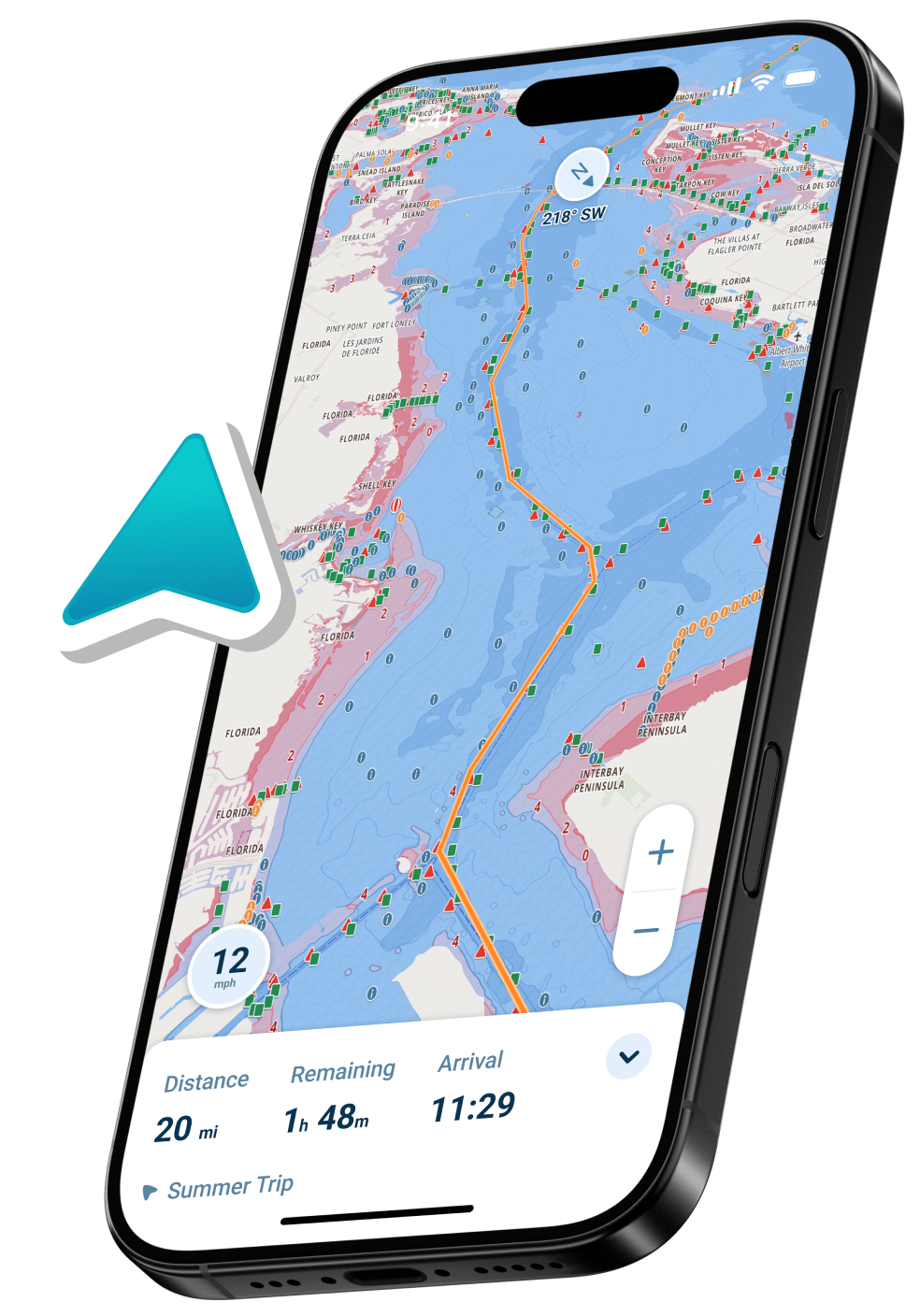
Where Deckee stops and Navionics becomes too technical, Wavve Boating hits the sweet spot. It gives you accurate, real-time charts that automatically color-code safe vs. shallow areas based on your boat’s draft. It also integrates GPS tracking, tide data, and weather overlays for smarter navigation, without the hardware dependency of Navionics.
Safety and Alerts
Deckee: This is where Deckee shines. It delivers official maritime alerts directly from Australian authorities. You’ll see warnings about restricted zones, marine parks, or changing conditions before you set out.
Navionics: Navionics offers limited safety alerts, relying mostly on chart symbols and user updates. It assumes the skipper already understands maritime conditions and regulations.
Ease of Use and Interface
Deckee: Deckee’s interface is clean and functional, but its map design is basic. It’s meant to be informative, not interactive. You can view alerts easily but can’t manipulate or personalize maps.
Navionics: Navionics provides unmatched data, but the interface can feel cluttered and overwhelming. Many first-time users find the controls unintuitive without prior marine navigation experience.
This is where Wavve Boating stands apart. Its mobile-first design prioritizes simplicity and clarity. The charts are visually easy to interpret, routes can be planned in seconds, and layers (like depth, tide, and wind) are built into a single screen. For most recreational boaters, it feels like using a familiar smartphone map app, but for the water.
Price and Accessibility
Deckee: Deckee is free, making it an appealing entry point for new boaters. However, since it doesn’t include navigation, most users eventually add a secondary app for actual charting or route planning.
Navionics: Navionics requires a paid annual subscription (typically around AUD $35–$80, depending on region and add-ons). It’s great for global travelers but may be overkill for casual local boating.
Wavve Boating: Wavve Boating offers a low-cost subscription with all premium features, navigation, weather, tides, and community maps, included. It’s also available on both iOS and Android, so there’s no hardware limitation like with Garmin.
Which App Works Best for Australian Boaters?
Australia’s waters are unique, sprawling coastlines, tidal rivers, coral reefs, and rapidly changing weather. Boaters here need both precision and practicality.
- Deckee delivers local safety data and awareness.
- Navionics offers global accuracy for professional navigation.
- Wavve Boating, however, provides the perfect hybrid, accurate charts, live updates, and local community insights built for Australian boaters who want to plan confidently and explore safely.
The Australian Context: Which App Works Better Locally?
Australia’s boating conditions demand more than a one-size-fits-all solution. Between the Great Barrier Reef, the Swan River, and countless coastal and inland waterways, the right app can make the difference between a smooth outing and a stressful one.
Deckee’s Local Relevance
Deckee performs best within Australian waters because it was built with safety compliance in mind. The app integrates with Australian Maritime Safety Authority (AMSA) and state-level boating regulators, offering local alerts that matter, like speed zones, restricted areas, and weather warnings.
This makes it ideal for new boaters, those renting vessels, or families who prioritize staying compliant. However, Deckee’s charts are fairly basic. You’ll get a general map view but not the detailed topography or live depth data needed for precise navigation.
For quick, safety-first checks, Deckee is a great resource. But for route planning, anchoring, or exploring unfamiliar areas, users often find themselves switching to another app.
Navionics’ Global Power, Local Limitations
Navionics remains the most trusted name for high-precision marine charting, and it’s easy to see why. The platform pulls from official hydrographic sources and sonar data contributed by users worldwide. This creates an incredibly detailed and reliable global map, complete with depth contours, navigation aids, and auto-routing.
For offshore cruisers or those who travel between regions, Navionics provides confidence. Its charts load beautifully, and route planning tools are extremely powerful.
But for many Australian recreational boaters, the experience can feel excessive. The data density, subscription tiers, and technical setup aren’t always necessary for casual day trips or local fishing runs. While Deckee may feel too simple, Navionics can feel too advanced, and that leaves a growing gap that mobile-first navigation apps have started to fill.
User Experience Comparison: What Boaters Are Saying
Deckee Users Appreciate Simplicity and Safety
Feedback from Australian boating forums often praises Deckee for its clarity and purpose. Users like that it’s free, lightweight, and provides official updates straight from maritime authorities. It’s the kind of app you open before launching, not necessarily while navigating.
Some users, however, note that Deckee “isn’t a chartplotter.” It lacks route planning, distance tracking, or waypoint marking. That simplicity keeps it accessible but also limits its utility once you’re underway.
As one user on a boating subreddit put it: “Deckee is great for checking safety zones, but I still need a separate navigation app when I’m out on the water.”
Navionics Users Love Precision, But Not the Complexity
Navionics users tend to be more experienced boaters, the kind who appreciate data layers, sonar integration, and route optimization. Reviews consistently highlight the app’s accuracy, especially for depth data and coastal navigation.
However, those same reviews often mention that Navionics can feel “crowded” or “technical.” New boaters sometimes find the icons, layers, and menus overwhelming.
Another common point of feedback? Price. Many users appreciate the depth of data but wish there were more flexible pricing options, especially if they only use the app occasionally.
That’s where modern mobile alternatives, like Wavve Boating, subtly stand out. By simplifying chart visuals and streamlining tools, they bridge the usability gap without sacrificing reliability.
Performance, Design, and Connectivity
Beyond features, the real difference between Deckee and Navionics often comes down to how they perform in real-world conditions.
Interface and Readability
Deckee offers a minimal interface that’s easy to scan quickly, but it’s not optimized for navigation detail. Navionics’ charts, while highly detailed, can feel crowded on smaller mobile screens. In contrast, newer apps that adopt a “less is more” design philosophy tend to make route visualization easier for day-to-day boating.
Offline Use and Connectivity
This is a major factor for Australian boaters. Many destinations, like the Whitsundays or Exmouth, have patchy or no mobile signal. Navionics allows full offline chart downloads, a clear strength. Deckee, being internet-reliant, loses functionality without a connection.
Apps that combine both, online intelligence and offline accessibility, provide the most reliable experience, especially for longer coastal trips.
Compatibility
Deckee runs on both iOS and Android, but it doesn’t integrate with marine hardware or GPS devices. Navionics, conversely, syncs seamlessly with Garmin chartplotters and instruments, making it ideal for those already in that ecosystem.
Deckee vs Navionics: Feature Summary
| Feature | Deckee | Navionics |
| Primary Focus | Safety & Compliance | Advanced Navigation |
| Chart Detail | Basic | High-resolution bathymetric |
| Offline Access | No | Yes |
| Community Features | Moderate (official alerts) | High (crowd-sourced data) |
| Ease of Use | Very easy | Complex for beginners |
| Best For | New boaters, rentals, families | Professionals, offshore cruisers |
This comparison shows a clear contrast: Deckee is purpose-built for safety awareness, while Navionics serves as a professional navigation platform. For many recreational boaters, something in between, accurate yet approachable, is often the ideal fit.
Verdict: Which Boating App Wins in 2026?
There isn’t a single “best” app for everyone. It depends on how you use your boat, where you go, and what kind of data you value most.
- Choose Deckee if your priority is compliance and safety awareness. It’s simple, government-backed, and perfect for new or casual boaters who want local alerts and quick checks.
- Choose Navionics if you’re after global precision and advanced route planning. It’s professional, feature-rich, and ideal for skippers running larger or offshore-capable vessels.
- Consider mobile-first apps like Wavve Boating if you fall somewhere in between, looking for clean, accurate charts, real-time community insights, and easy offline access without the steep learning curve.
Final Thoughts: Finding Balance Between Simplicity and Power
Deckee and Navionics represent two ends of the boating spectrum, one focused on safety, the other on navigation mastery. Both serve valuable roles in keeping boaters informed and confident on the water.
But as boating technology continues to evolve, more people are looking for tools that blend practicality with precision. Apps that visualize depth, tides, and hazards in one unified view, while remaining approachable, are setting the new standard for navigation in 2026 and beyond.
In that landscape, apps like Wavve Boating offer a glimpse of where the industry is heading: mobile-first, community-driven, and built for real-world conditions across Australia’s diverse waterways.
Whether you prioritize compliance, control, or convenience, one thing is certain, the future of marine navigation is in your pocket, not mounted on your dashboard.
Content
- Understanding the Core Difference Between Deckee and Navionics
- Comparing Key Features: Deckee vs Navionics
- The Australian Context: Which App Works Better Locally?
- User Experience Comparison: What Boaters Are Saying
- Performance, Design, and Connectivity
- Deckee vs Navionics: Feature Summary
- Verdict: Which Boating App Wins in 2026?
- Final Thoughts: Finding Balance Between Simplicity and Power