The Humminbird Helix series has been a fixture on recreational fishing boats for good reason. It occupies the sweet spot between entry-level units that lack genuinely useful features and professional-grade fish finders that cost more than most weekend anglers want to spend. The Helix lineup covers screen sizes from 5 to 15 inches, with sonar options ranging from standard Dual Spectrum CHIRP all the way up to MEGA Imaging for anglers who want the sharpest underwater picture the brand offers.
This review covers the most popular Helix models in detail: how they perform on the water, what separates the configurations from each other, and who each setup is actually best suited for. Pricing reflects approximate current retail across major outdoor retailers, though specific configurations vary and prices shift seasonally.
The Humminbird Helix Lineup at a Glance
The Helix series is available in multiple screen sizes. The four most widely purchased for recreational fishing and boating are the Helix 5, 7, 9, and 10.
Helix 5 features a 5-inch widescreen color display and is the most accessible entry point in the series. It suits small boats, jon boats, kayaks, and ice fishing setups well. The screen is compact but readable for its size, and the feature set covers everything most occasional anglers actually need.
Helix 7 moves to a 7-inch display and opens the door to MEGA Imaging technology on higher-tier configurations. It is the most popular model in the lineup, balancing capability and cost well for the average angler who wants more than the basics.
Helix 9 and Helix 10 step up to 9- and 10-inch displays with more processing power, better target separation at depth, and full compatibility with the One-Boat Network for integration with Minn Kota trolling motors and Cannon downriggers.
One consistent note across the entire Helix range: all models use softkey button navigation, not touchscreen. Touchscreens are available on Humminbird’s higher-end SOLIX and XPLORE lines. The button system works reliably in wet conditions and on rough water where a touchscreen would become frustrating. It requires a short familiarization period but is logical once you know the layout.
Sonar Technology: What Is Actually Inside
Understanding the sonar options in the Helix lineup helps you pick the right configuration for how you fish.
Dual Spectrum CHIRP
All current Helix models include Dual Spectrum CHIRP as the baseline 2D sonar. CHIRP sends a continuous sweep of frequencies rather than a single ping, producing cleaner fish arches and better target separation than older technologies. The Dual Spectrum system offers Wide Mode for maximum water column coverage and Narrow Mode for focusing detailed returns on a specific area directly beneath the boat. This is the feature most anglers use most of the time, and Humminbird’s implementation of it is consistently well-regarded across the lineup.
Down Imaging
Available on select Helix 5 configurations and standard on most Helix 7 and higher models. Down Imaging produces a near-photographic cross-section view of the water column directly beneath the boat. Structure, baitfish clouds, vegetation, and bottom composition are all clearly visible in a way that traditional sonar does not replicate. It is particularly useful for reading complex bottom structure and identifying exactly where fish are holding.
Side Imaging
Available on select Helix 7, 9, and 10 models. Side Imaging sweeps left and right of the boat simultaneously, covering a wide swath of water on both sides without having to drive directly over a spot. It is invaluable for scanning submerged timber, rock piles, grass edges, and other fish-holding structure efficiently. MEGA Side Imaging, available on upper-tier models, produces noticeably sharper detail than standard Side Imaging.
MEGA Imaging
The MEGA prefix indicates Humminbird’s highest-frequency imaging sonar. It produces the clearest and most detailed underwater images in the lineup. MEGA versions of both Down Imaging and Side Imaging are available on upper-tier Helix 7 configurations and throughout the Helix 9 and 10 range. For anglers who fish complex structure or who tournament fish where detail matters, the difference between MEGA and standard imaging is visible and meaningful.
Image courtesy of https://www.lake-link.com/press-releases/humminbird-helix-adds-mega-imaging-and-dual-spectrum-chirp-to-product-features/535/
AutoChart Live: Humminbird’s Standout Mapping Feature
One of the most practical Humminbird features for recreational anglers is AutoChart Live. As you drive over water, the unit uses your GPS position and sonar returns to build real-time depth contour maps of wherever you are fishing. The result is a custom, high-resolution map of your local lake or river that layers on top of the built-in basemap.
This is especially valuable on bodies of water that are not well-charted in the factory basemap, or where official maps lack contour detail. Small lakes, private impoundments, and lesser-known reservoirs all benefit from AutoChart Live data you build yourself over time.
Every current Helix model ships with eight hours of built-in AutoChart Live recording capacity. Additional storage is available through AutoChart Zero Line SD cards for virtually unlimited mapping capacity.
The built-in Humminbird Basemap covers over 10,000 US lakes plus coastal coverage. For anglers who want more pre-loaded detail, the Helix series is also compatible with Navionics chart cards and Humminbird’s own premium LakeMaster and CoastMaster chart options.
Model-by-Model Breakdown
Helix 5
The Helix 5 is the starting point and the right choice for anglers who want GPS and CHIRP sonar without overcomplicating their setup or their budget. Base configurations with Dual Spectrum CHIRP GPS start around $299 to $399 at current retail. Configurations adding Down Imaging are available for somewhat more.
At this price you get a 5-inch widescreen color display, Dual Spectrum CHIRP sonar, internal GPS, Humminbird Basemap covering US lakes and coastlines, and AutoChart Live built in.
What the Helix 5 does not include: Side Imaging is not available at this screen size. Networking capability through the One-Boat Network is limited or unavailable on most Helix 5 configurations. For a first fish finder, a secondary bow unit, or a primary unit on a kayak or small aluminum boat, it delivers well for the money.
Helix 7
The Helix 7 is where the lineup becomes genuinely compelling. The 7-inch display is large enough to comfortably run split-screen views, showing CHIRP and Down Imaging side by side or chart and sonar together without either being too small to read effectively.
Base Helix 7 CHIRP GPS G4N models are typically available around $599 to $749 at current retail. MEGA Side Imaging configurations climb toward $999 and above depending on the specific build.
Networking versions, identified by the G4N suffix, add Ethernet, Bluetooth, Wi-Fi, and NMEA 2000 connectivity. These enable integration with compatible Minn Kota trolling motors, Cannon downriggers, and additional Humminbird units. If you want to build a networked fishing system on your boat, G4N models are the right starting point.
The Helix 7 MEGA SI is the configuration most performance-oriented weekend anglers gravitate toward. The combination of MEGA Down and MEGA Side Imaging at a 7-inch screen size hits a practical sweet spot for boats where console space is limited but image quality still matters.
Helix 9
Moving to the Helix 9 brings a 9-inch display, increased processing power, and improved deep-water CHIRP performance. The larger screen makes a tangible difference when running split views with chart and sonar simultaneously. You can see both in enough detail to actually act on what the unit is showing you.
Helix 9 CHIRP GPS G4N units typically start around $800 to $900. MEGA SI configurations are priced higher depending on the build. At this screen size with MEGA Imaging, the Helix 9 competes with units at significantly higher price points from other brands.
Fish identification, structure detail, and target separation at depth are all meaningfully better than on the Helix 7, particularly in deeper water and around complex structure.
Helix 10
The Helix 10 is the largest Helix model most recreational anglers will consider before crossing into the Helix 12 and 15 territory. The 10-inch display is well-suited to center console and larger aluminum boats where screen real estate genuinely matters for reading both chart and sonar at speed.
The Helix 10 CHIRP GPS G4N is available around $979 at major outdoor retailers. MEGA configurations are priced higher and are frequently available at sale pricing through large retailers, especially mid-season.
For anglers who fish big water, offshore inshore structure, or large reservoirs where seeing the full picture matters at all times, the Helix 10 justifies its price. It is also a natural fit for the angler who wants one high-quality unit that handles everything rather than a multi-unit networked setup.
Pros and Cons
Pros
Button navigation works well on the water. The softkey system is logical once you spend a few minutes with it. Most settings are reachable within two or three button presses, and the controls perform reliably in wet conditions and rough weather where a touchscreen would fail.
Display quality is strong across the lineup. IPS display technology on current Helix models handles direct sunlight well, which matters significantly when you are fishing all day in open water.
AutoChart Live is a genuine differentiator. The ability to build custom, high-resolution maps of your home water as you fish is a feature competitors have not fully replicated at this price point. Over multiple seasons, the map data you accumulate becomes a meaningful fishing advantage.
The lineup scales without forcing you to switch brands. Entry-level CHIRP GPS for around $300 to $400. Full MEGA SI networking for around $999. You can upgrade within the Helix family and keep your saved waypoints, chart preferences, and fishing data.
Cons
No touchscreen on any Helix model. For boaters coming from tablet navigation apps or touch-based units, the button system requires adjustment. It is not a dealbreaker, but it is a real difference in day-to-day use.
There is a learning curve on the menu system. First-time Humminbird users typically spend a session getting familiar with customizing split-screen views and configuring sonar settings. The layout is logical but not instantly intuitive for every user.
Networking requires the G4N configuration and Ethernet cables. Setting up a multi-unit networked system on a larger boat is straightforward, but it is not plug-and-play. Budget time and materials for proper installation.
MEGA Live Imaging adds significant cost. Forward-facing live sonar capability is available on select Helix models via compatible external transducers, but it substantially increases the overall cost of the setup. For most recreational anglers, standard MEGA Imaging provides more than enough detail without it.
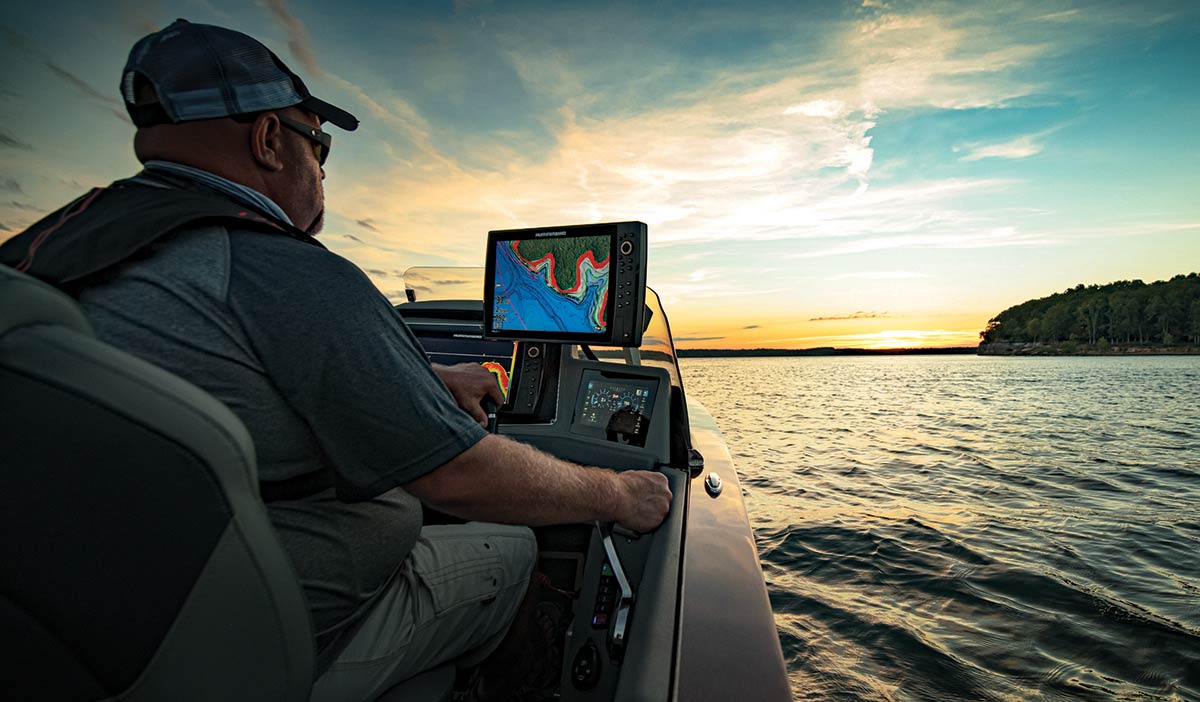
Image courtesy of https://humminbird.johnsonoutdoors.com/us/news/humminbird-introduces-fourth-generation-helix
Who the Helix Series Is Best For
The Helix series is the right choice for recreational anglers who want proven sonar technology, reliable GPS, and solid build quality without crossing into professional-grade pricing. It handles freshwater fishing on lakes and rivers well, performs capably for coastal inshore use, and fits naturally on small to mid-size fishing boats.
Kayak and small boat anglers who want GPS and sonar in a compact, reliable package should start with the Helix 5. It delivers everything needed without excess size or cost.
Weekend anglers who want the best image quality their budget allows will find the Helix 7 MEGA SI a hard unit to beat at its price point. It punches above its class in imaging quality.
Serious anglers who fish big water, tournament fish, or spend significant time on structure-heavy fisheries will appreciate moving to the Helix 9 or 10 for the added screen real estate and processing capability.
Anglers who want touchscreen operation, live forward-facing sonar as a primary feature, or full professional networking may want to look at Humminbird’s SOLIX or XPLORE lines instead.
Frequently Asked Questions
Does the Humminbird Helix have a touchscreen?
No. All Helix models use softkey button navigation. Touchscreens are available on Humminbird’s SOLIX and XPLORE series only.
What is the difference between Helix G3, G4, and G4N?
G3 and G4 indicate product generations with updated internal hardware and firmware. The N suffix on G4N indicates networking capability, which adds Ethernet, Bluetooth, Wi-Fi, and NMEA 2000 connectivity for integrating with trolling motors, downriggers, and other compatible units.
What does MEGA Imaging do differently than standard imaging?
MEGA Imaging uses higher sonar frequencies than standard Down and Side Imaging. The result is a significantly sharper, more detailed picture of structure, bottom composition, and fish. The difference is clearly visible when comparing units side by side, especially around complex underwater structure.
Can I use Navionics charts on a Humminbird Helix?
Yes. The Helix series is compatible with Navionics chart cards, as well as Humminbird’s own premium LakeMaster and CoastMaster chart options. The built-in Humminbird Basemap covers over 10,000 US lakes and US coastal areas as a starting point.
Is the Helix suitable for saltwater fishing?
Yes, for inshore and nearshore applications. The Helix performs well in coastal bays, estuaries, tidal rivers, and nearshore fishing environments. For deep offshore work where sonar power and depth capability are primary considerations, larger units from the SOLIX lineup are more appropriate.
How do I update Humminbird Helix software?
Software updates for the Helix series are available through Humminbird’s website and are applied via SD card. Helix G4N networking models also support wireless software updates through the Humminbird FishSmart app on your phone.
How does the Helix compare to Garmin and Lowrance at the same price point?
All three are solid mid-range options with different strengths. Humminbird’s MEGA Imaging is widely regarded as particularly strong at its price tier. The main differentiators come down to chart compatibility preferences, sonar philosophy, and existing ecosystem. Humminbird and Minn Kota integrate tightly through the One-Boat Network, which is a meaningful advantage for anglers already using Minn Kota trolling motors.
Do I need a separate chartplotter for navigation or does the Helix handle that?
Helix models with internal GPS handle basic navigation functions including waypoints, routes, and chart display. Many anglers also use a navigation app on their phone alongside the fish finder for things like real-time tide awareness, weather overlays, and detailed coastal charting. If you are looking for a dedicated mobile navigation option to pair with your setup, Wavve Boating is worth a look.
The Humminbird Helix is a well-built, practical fish finder lineup that has earned its reputation among recreational anglers over years of real-world use. It delivers features and image quality that justify the cost for anyone who fishes with any regularity. The key is matching the screen size and sonar configuration to your actual boat setup and how you fish. Get that right, and you will have a unit that holds up for many seasons on the water.