Running from Miami down to Key West is one of the great boating trips in the United States, a journey along the entire length of the Florida Keys through water that is as beautiful as it is demanding. It rewards boaters with stunning scenery, clear water, and access to a string of remarkable destinations, but it also asks for genuine respect and preparation.
Shallow water, shifting sandbars, coral reefs, and changeable weather all factor in. Understanding your route options, the challenges you will face, and how to plan properly turns this passage from intimidating into an achievable and genuinely memorable adventure.
What the Trip Actually Involves
The passage from Miami to Key West follows the Florida Keys as they curve southwest from the mainland. The Keys form a long chain of islands that separates the Atlantic Ocean on one side from Florida Bay and the Gulf of Mexico on the other, and your route runs roughly parallel to that chain for well over a hundred nautical miles. It is not a trip most boaters do in a single run; it naturally breaks into segments, which is part of what makes it enjoyable rather than grueling.
What makes this journey special is also what makes it demanding. The same shallow, clear water that lets you see the bottom and makes the Keys so beautiful is the water that grounds unprepared boats daily. Treating the trip with appropriate seriousness, planning your segments and stops, and respecting the conditions is what separates a wonderful experience from a stressful or expensive one.
Choosing Your Route
The Atlantic Side via Hawk Channel
Many boaters make the trip on the Atlantic side using Hawk Channel, a route that runs between the islands and the offshore reef line. Hawk Channel offers a degree of protection from ocean swells while providing enough depth for most recreational boats, which makes it a popular and sensible choice.
It passes a long series of islands and destinations, so you can plan stops along the way, and its depths generally accommodate recreational vessels, though keeping an eye on your charts remains essential throughout.
The Bay Side via Florida Bay and the ICW
The alternative runs on the bay side, using portions of the Intracoastal Waterway and the waters of Florida Bay. This side offers different scenery and a different character, but it demands more caution because it includes very shallow areas.
Draft awareness becomes critical here, and boaters choosing this route need a clear understanding of their boat’s draft and the depths they will encounter. It suits boaters with appropriate draft and careful navigation habits rather than those looking for a relaxed, forgiving passage.
Deciding Which Suits You
The right choice depends on your boat, your experience, and your preferences. Consider your draft, your comfort with different conditions, and the stops you want to make. Many boaters favor Hawk Channel for its balance of protection and accessibility, but the best route is genuinely the one that fits your specific situation, so weigh the options carefully against your boat and your plans rather than simply following the crowd.
Planning the Passage
Thinking in Segments
Because the full passage covers a significant distance, most boaters break it into manageable segments rather than attempting the whole thing at once. Planning sensible stops turns a long haul into an enjoyable multi-day trip with time to actually experience the Keys.
Think realistically about your boat’s cruising speed and calculate travel times for each leg, building in a margin for conditions. Flexibility in your plan is valuable, because weather and circumstances have a way of rearranging even careful schedules.
Planning Your Stops
The Keys offer a wealth of destinations for overnight stops or breaks, and planning them is part of the pleasure of the trip.
Research where you can refuel along your route, since the distance means most boats will need fuel at least once, and identify overnight stops with facilities that match your needs. Thinking this through in advance prevents the twin headaches of running low on fuel and arriving somewhere after dark with nowhere arranged to stay.
Fuel Planning in Particular
Fuel deserves its own attention. Understand your boat’s range and plan your refueling stops to stay comfortably within it. The distance involved means fuel planning is not optional, and conditions, currents, and detours can all increase consumption beyond what you would burn in flat calm.
Always keep a reserve, because a conservative fuel plan is one of the simplest ways to keep a long passage from becoming an emergency.
The Navigation Challenges to Respect
Shallow Water
The waters around the Keys include extensive shallow areas, and managing them is the central navigation challenge of the trip. Knowing your boat’s draft and monitoring water depth continuously is what keeps you off the bottom. Both the reef side and the bay side include areas where shallow water demands attention, and a grounding here is not just inconvenient; near coral it can cause environmental damage as well as harm to your boat.
Modern navigation tools that show depth relative to your specific boat’s draft make shallow-water navigation considerably less stressful.
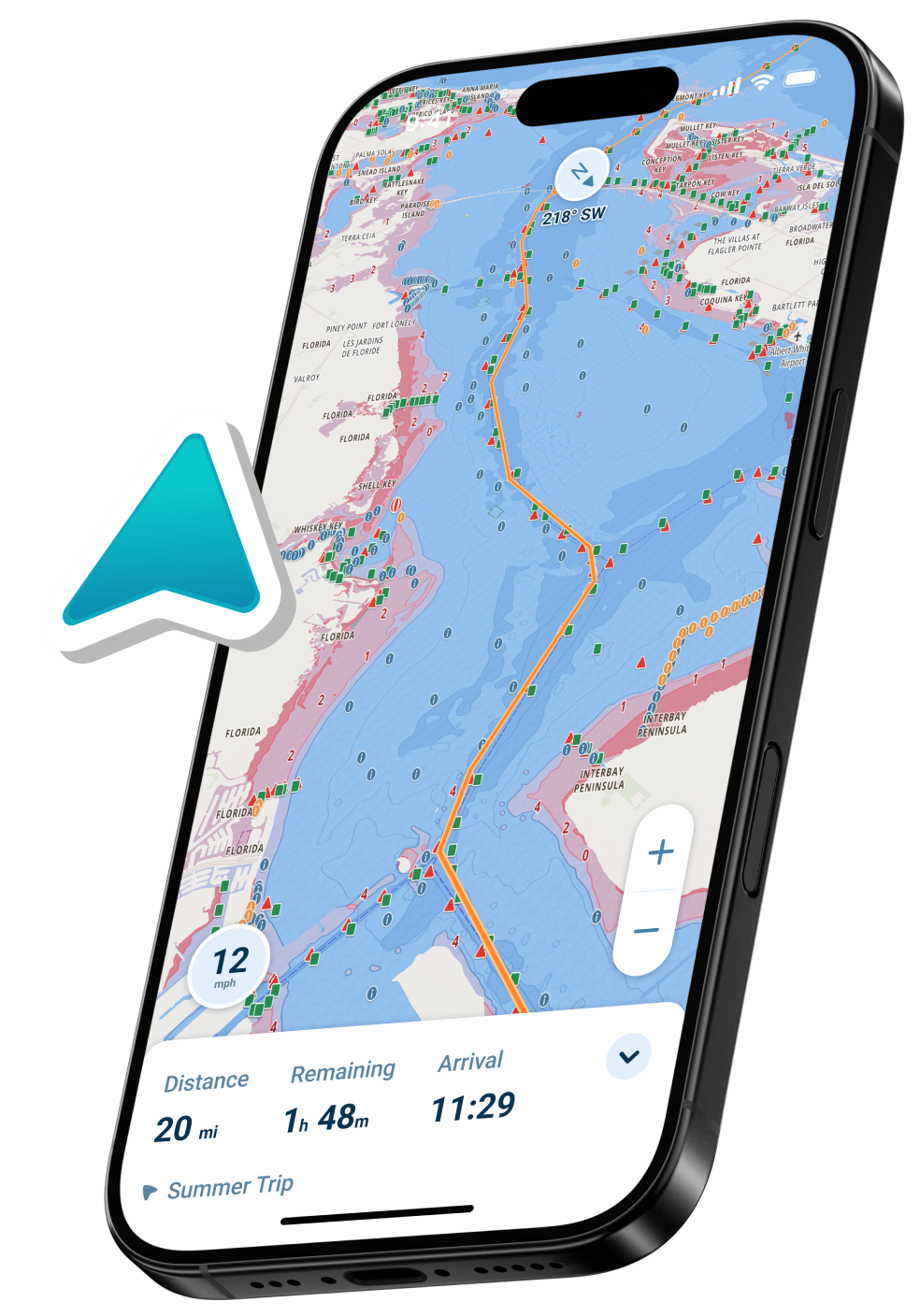
Apps such as Wavve Boating, for instance, shade the chart to show where your particular boat can safely go, which is genuinely useful in water this shallow and this unforgiving. Whatever tools you use, understanding where the shallow areas lie and how the tide affects them is what lets you navigate the Keys with confidence rather than anxiety.
Coral Reefs
The Florida Keys are home to extensive coral reef systems, which are simultaneously a navigation hazard and a protected, fragile environment. Striking coral damages your boat and harms an ecosystem that takes decades to recover, so careful navigation that keeps you in safe water and away from the reefs protects both.
Charts mark reef areas, and navigation aids help you maintain safe distance. Some areas carry special protections that require particular care, so it is worth knowing the rules for the waters you are passing through.
Tides
Tides affect water depth throughout the Keys, especially in the shallow areas, and understanding them is part of safe passage.
An area that is comfortably navigable at high tide can become impassable at low water, so learning how the tides affect your specific route lets you time your passages through shallow stretches to coincide with favorable water. Real-time tide information supports these decisions well, turning what could be guesswork into informed timing.
Weather
Weather shapes this passage significantly. Wind, storms, and shifting conditions all affect your safety and comfort, and the Keys are known for afternoon thunderstorms in the warmer months.
Check forecasts before you depart and keep monitoring conditions as you go, and be genuinely willing to adjust your plans, seek shelter, or wait out weather rather than pushing on. Flexibility and conservative decision-making are what keep you safe when conditions turn, and no schedule is worth risking a dangerous passage for.
Preparing Your Boat and Yourself
Navigation Equipment
Reliable navigation gear is essential for this trip. Charts covering your entire route, a working GPS or navigation app, and a compass give you the capability you need, and understanding how to use all of it before you leave prevents problems when it matters. Modern navigation apps that combine GPS positioning with detailed charts and depth information serve this passage particularly well. Whatever you choose, make sure it covers your whole route and that you are genuinely comfortable operating it.
Safety Equipment
Carry all required safety equipment plus sensible extras for a passage of this length. Life jackets, working communication equipment, signaling devices, and emergency supplies provide the margin you want when you are a long way from help. Make sure your communication gear works and that you understand your emergency procedures. Being prepared for problems you hope never to face is simply part of responsible boating on a trip like this.
Getting the Boat Ready
Prepare your boat thoroughly before you go. Check the engine, systems, and equipment, and address any maintenance issues rather than hoping they hold.
A well-maintained boat dramatically reduces the chance of a breakdown turning a pleasant trip into a difficult situation. Verify your fuel and water capacity, confirm your safety equipment is complete and functional, and make sure everything works before you are relying on it miles from assistance.
Making the Run
Plan your departure from Miami around weather, tides, and your intended first stop, and an early start often buys you more daylight and better conditions. As you travel, monitor your position, depth, and the conditions continuously, staying aware of navigation aids, hazards, and other vessels.
Adjust your plans as conditions warrant, and be ready to seek shelter or change your route if the weather turns. As you approach Key West, follow the charted routes and navigation aids into the harbor, and have your arrival and docking thought through in advance, since arriving somewhere new is easier when you are not improvising.
Enjoying the Journey, Not Just the Destination

The reward of this trip is the journey through the Keys, not simply arriving at Key West. The islands offer remarkable destinations, beautiful water, and experiences worth slowing down for. Building time into your trip to actually enjoy the stops along the way is what transforms a long passage into a genuine adventure.
The boaters who savor the Keys rather than racing through them come away with the best memories, so resist the urge to treat the run as mere transportation.
Setting Out With Confidence
The passage from Miami to Key West rewards preparation. Plan thoroughly before you leave, understanding your route, your stops, and your fuel needs. Respect the shallow water and the coral reefs that define these waters, monitor the weather closely, and stay flexible when conditions change. Make sure your navigation equipment covers your route and that you can use it well, carry proper safety gear and know how to use it, and prepare your boat so a breakdown does not derail the trip.
Do all of that, and this passage becomes what it should be: an unforgettable journey through some of the most beautiful water in the country. With careful planning, solid navigation, and genuine respect for the conditions, you can make the run from Miami to Key West safely and come home with memories that last far longer than the trip itself.