Wavve Boating and Windy serve different purposes on the water, and understanding that difference is the key to getting value from both. Wavve Boating is a full marine navigation app: nautical charts, draft-aware depth shading, real-time tide integration, route planning, GPS tracking, and weather overlays all in one place. Windy is a weather visualization platform that offers among the most detailed and visually rich wind, wave, and atmospheric data available on any consumer app.
The reason boaters compare these two apps is that they overlap in weather features. Both display wind, waves, and forecasts. But the overlap is narrower than it appears. Wavve is built for on-water navigation with weather as a supporting layer. Windy is built for weather analysis, with navigation as an afterthought if it exists at all.
Many experienced boaters use both and find they complement each other well. This comparison breaks down what each app actually does, where each one performs better, and how to think about whether you need one or both.
Image courtesy of https://community.windy.com/topic/10598/windy-tutorial-how-to-use-a-route-planner
Pricing at a Glance
Wavve Boating is available on iOS and Android with a 14-day free trial. After the trial, the subscription is $69.99/year or $11.99/month.
Windy offers a robust free tier that covers most of the weather features the app is known for. Windy Premium is currently $24.99/year (auto-renewing annual subscription) and adds features including more forecast models, longer forecast range, and additional display options. The free tier alone is sufficient for many users.
The pricing comparison is straightforward: Windy’s free tier is competitive with paid navigation apps for pure weather content, while Wavve Boating at $69.99/year delivers a complete on-water navigation platform.
Navigation and Charts: Wavve Boating Wins Clearly
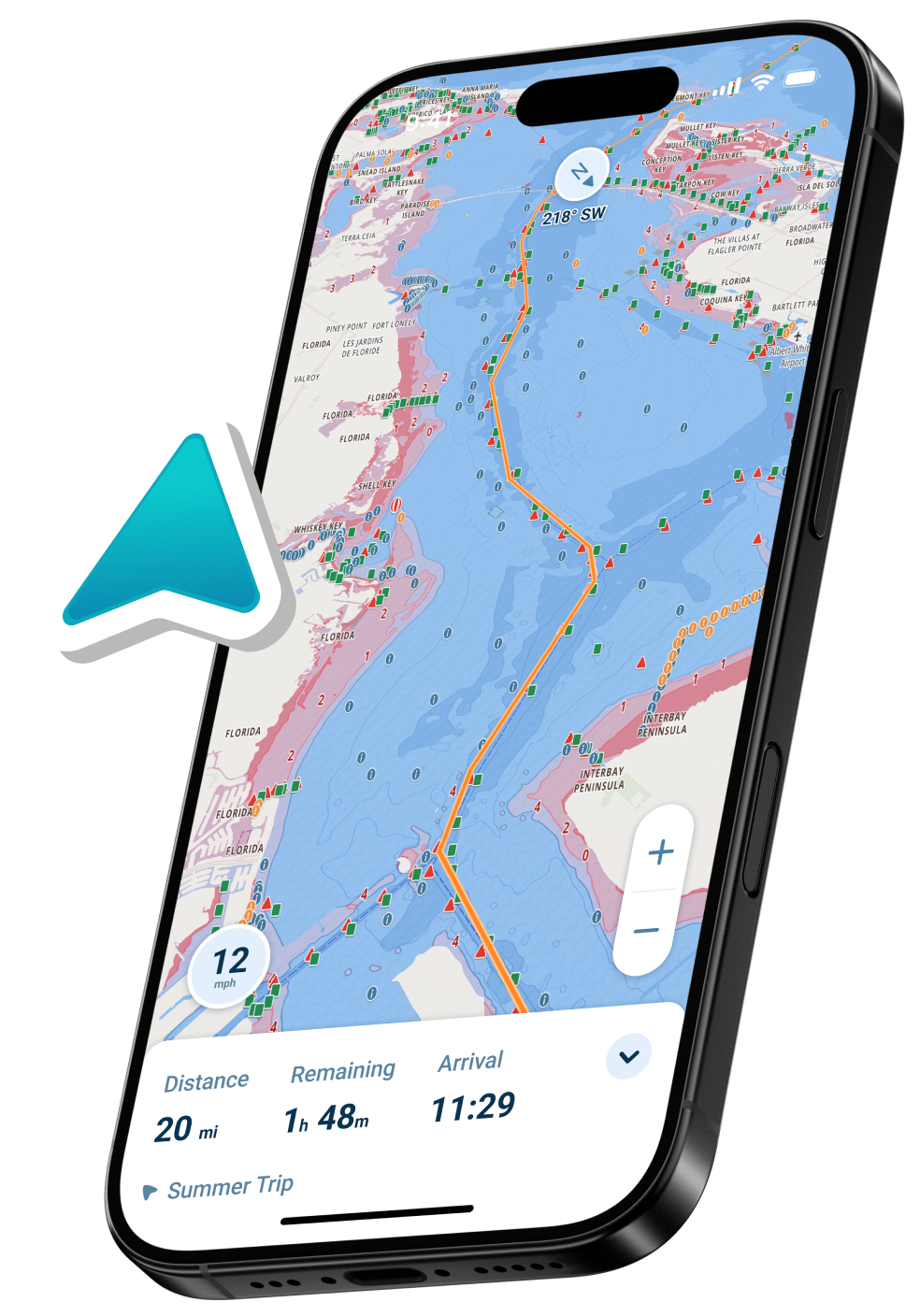
Wavve Boating is a full marine navigation app. It displays official NOAA charts for US waters and CHS charts for Canadian waters, providing legal-grade nautical charting on your phone or tablet. Your GPS position is overlaid on the chart in real time. You can plan routes, mark waypoints, track your path, and navigate turn by turn.
Windy has no meaningful marine navigation functionality. It displays your GPS position on a weather map, and that is essentially the extent of it from a navigation standpoint. There are no nautical charts, no depth data, no buoys or aids to navigation, no route planning tools, and no waypoint management. If you need to actually navigate from one place to another on the water, Windy is not built for that task.
Weather Visualization: Windy Wins in Depth and Flexibility
Windy’s core strength is weather visualization, and it is genuinely exceptional at it. The app pulls data from multiple global and regional weather models including ECMWF, GFS, ICON, NAM, and others, allowing you to compare how different models handle the same forecast period. For boaters making go or no-go decisions on offshore passages or multi-day trips, the ability to see where models agree and where they diverge is meaningful.
Windy’s animations are some of the best available on any consumer platform. Wind flow animations, wave animations, and radar loops are visually clear and update regularly. You can view wind, gusts, waves, swell direction, precipitation, cloud cover, CAPE (instability), and many other parameters by simply selecting them from the layer menu.
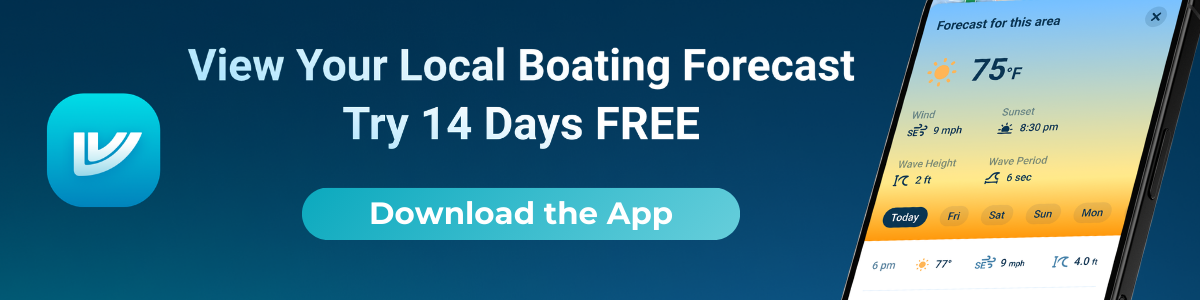
Wavve Boating includes integrated weather overlays directly on the nautical chart, covering wind, waves, tide predictions, and community hazard reporting. For most recreational boaters making day trips, the weather available in Wavve is more than sufficient. You can see what the wind is doing, what the waves look like, and when the tide is high and low without leaving the chart.
The difference is depth and flexibility. Windy gives you more models, more parameters, more historical context, and more ways to interrogate a forecast. For a weekend cruise on familiar waters, the weather in Wavve may be all you need. For a passage planning session the night before a long offshore run, Windy’s multi-model view is genuinely useful.
Tide and Depth Awareness: Wavve Boating’s Strongest Differentiator
Wavve Boating’s draft-aware depth shading is a feature that has no equivalent in Windy. You enter your boat’s draft once, and the app automatically color-codes the nautical chart to show where you can navigate safely based on current tidal conditions. Blue is clear. Red is too shallow. The shading updates in real time as the tide changes throughout the day.
This is an active safety feature. In tidally dynamic areas, coastal bays, inlets, the Intracoastal Waterway, and shallow anchorages, this kind of real-time depth awareness changes how you navigate. You are not doing mental math about tide tables and chart depths separately. The app does it for you.
Windy displays tide predictions in graph form for nearby stations, which is useful for understanding when high and low tide occur. But it does not integrate that tidal data with depth charts, and it has no concept of your boat’s draft. Tide data in Windy is a planning reference. Tide data in Wavve is an active navigation layer.
Offline Access
Wavve Boating supports offline chart downloads. Once you have downloaded charts for your area over Wi-Fi, the app navigates with full chart functionality without any internet connection. GPS on your device works independently of cellular, and the downloaded charts display normally. Weather and tide data refresh when you reconnect, but the core navigation function works fully offline.
Windy is fundamentally a real-time data platform. It requires an internet connection to function. Weather data, model runs, and radar are all cloud-sourced and do not work offline in any practical sense. If you lose connectivity on the water, Windy stops being useful. Wavve continues working normally.
Interface and Learning Curve
Wavve Boating is designed for recreational boaters, including first-time users, and its interface reflects that. The app is clean, the chart is the central element, and the important information like speed, heading, and depth shading is always visible without navigating menus. Most users are navigating confidently within the first session.
Windy has a more complex interface by design. It is built for users who want to dig into weather data in detail, and the layer system, model selector, and animation controls give experienced users a lot of flexibility. For someone who just wants to check if the wind will be manageable tomorrow, the interface can feel like more than they need. For someone planning around a cold front or comparing model runs for an offshore trip, the depth is exactly what they came for.
Best Use Cases for Each App
Use Wavve Boating for: Active on-water navigation with nautical charts and real-time GPS. Shallow water areas where tidal depth awareness matters. Day trips, coastal cruising, fishing runs, and sandbar visits where you need accurate chart data and route tracking. Integrated weather awareness without leaving the chart view.
Use Windy for: Pre-trip weather analysis before a passage or long run. Comparing multiple forecast models to identify forecast confidence. Viewing wind and wave animations to understand weather patterns visually. Checking swell period and direction for offshore trips. Evaluating storm timing and intensity.
Use Both For: The combination is genuinely practical and costs less than most people expect. Windy’s free tier covers the pre-trip weather analysis function well for most recreational boaters. Wavve Boating handles everything on the water. The workflow many boaters settle into is: check Windy the night before and morning of a trip for the detailed forecast, then switch to Wavve Boating as the primary tool from the moment you leave the dock.
Head-to-Head Summary
| Feature | Wavve Boating | Windy |
| Nautical Charts | Yes, official NOAA & CHS | No |
| GPS Navigation | Yes, full route and tracking | Position only |
| Draft-Aware Depth Shading | Yes, automatic and tide-adjusted | No |
| Weather Overlays | Yes, on chart | Yes, advanced multi-model |
| Tide Predictions | Yes, integrated with depth | Yes, graph format only |
| Offline Charts | Yes | No |
| Multi-Model Forecasts | No | Yes |
| Free Tier | 14-day trial | Yes, robust |
| Paid Price | $69.99/yr or $11.99/mo | $24.99/yr Premium |
| Best For | On-water navigation | Pre-trip weather analysis |
Frequently Asked Questions
Can Windy replace a marine navigation app?
No. Windy does not have nautical charts, depth data, aids to navigation, route planning, or waypoint management. It is a weather visualization platform and works best as a complement to a dedicated navigation app rather than a replacement for one.
Does Wavve Boating have enough weather data for most boaters?
For most recreational day boaters and weekend cruisers, yes. Wavve’s integrated weather overlays covering wind, waves, and tides on the chart are sufficient for most decisions. Boaters planning long passages or offshore runs who want to compare multiple forecast models will find Windy adds meaningful value alongside Wavve.
Does Windy work offline?
No. Windy requires an internet connection to display weather data. It does not function meaningfully without cellular or Wi-Fi connectivity.
Is Windy free?
The core Windy experience is available for free and covers most of the weather features the app is known for. Windy Premium at $24.99/year adds additional forecast models, a longer forecast range, and extra customization options. Many users find the free tier sufficient.
Which app is better for shallow water boating?
Wavve Boating. Its draft-aware depth shading, which updates in real time based on current tides, is specifically designed for shallow water navigation. Windy has no equivalent feature.
Can I use both apps at the same time?
Yes, and many boaters do. Using Windy for pre-departure weather planning and Wavve Boating for active on-water navigation is a natural and complementary workflow.
Does Wavve Boating include weather forecasts?
Yes. Wavve Boating includes wind, wave, and weather overlays displayed directly on the nautical chart, along with integrated tide predictions and community hazard reports. The weather is practical and chart-integrated rather than model-analysis focused.
Which app is better for a day trip on a lake or bay?
Wavve Boating is the more practical choice for an active day on the water. The integrated chart, GPS navigation, and tide-aware depth shading are all immediately useful during the trip. Windy is better used before you leave to check the forecast.

Wavve Boating and Windy are not competing for the same role on your phone. One navigates, the other forecasts. The boaters who get the most from both are the ones who understand that distinction: check Windy when you are planning, switch to Wavve Boating when you are underway.